Entry · Ref XEIUTCGL
Choosing the Right Dune Buggy for Dubai's Terrain
- Posted
- 2026-11-18
- Last amended
- 2026-11-18
- Account
- @thebuggydubai
Understanding Your Dune Buggy Options
Dubai's landscape offers a unique mix of open desert, soft sand, and rocky patches. Picking the right buggy for these conditions makes the difference between a smooth ride and a frustrating one. Many first-time riders focus on speed or looks, but the real factors are durability, weight, and how the vehicle handles loose sand. Before you start shopping or booking, it helps to know what to look for and what to avoid.
Know the Terrain You Will Ride On
The Dubai desert is not a single surface. Closer to the city, you find hard-packed sand and gravel. Further out, the dunes become soft, steep, and unpredictable. A buggy that works on flat trails may struggle on tall dunes. If you plan to ride mainly on established tracks, a lighter, more agile vehicle might suit you. If you want to tackle the big dunes, you need something with more power and a wider tire base. Ask any rental operator about the specific area you will visit. Some buggies are built for speed on flat ground, while others are designed to climb and descend soft sand without getting stuck.
Engine Power and Type
Most dune buggies use either a petrol or a diesel engine. Petrol engines are lighter and rev higher, which can be fun on open stretches. Diesel engines offer more torque at low speeds, which helps when you are crawling up a steep dune. For Dubai's sand, torque is often more useful than top speed. A buggy that can maintain steady power through soft sand will keep you moving forward. Look for a motor with at least 800cc to 1000cc for a single-person buggy, and higher for a two-seater. Anything smaller may lack the grunt to get you out of a soft patch. Pay attention to the cooling system too. In the heat, an air-cooled engine can overheat if you push it hard for long. Liquid-cooled engines handle the heat better, especially on long rides.
Weight and Build
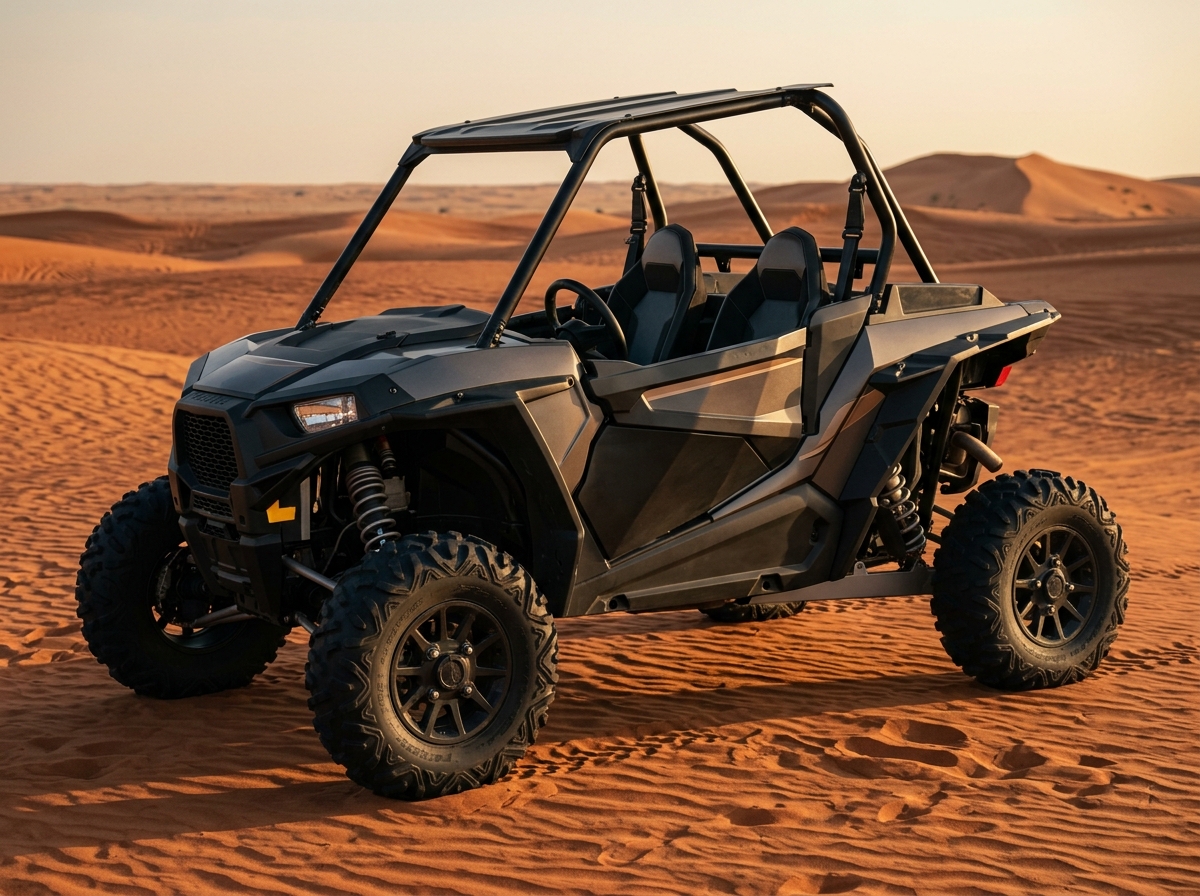
Weight affects how the buggy sits on the sand. A heavy buggy sinks deeper, which means more drag and more chance of getting stuck. But a very light buggy may not have enough traction to climb steep dunes. The ideal is a balanced design that uses a sturdy frame without adding unnecessary bulk. Look at the chassis material. Steel frames are strong but heavy. Aluminum frames are lighter but can flex under hard use. Some modern buggies use a mix of both, keeping the weight down while staying tough. Check the suspension travel as well. Long-travel suspension helps the wheels stay in contact with the sand, which improves grip and comfort. Short-travel suspension bounces you around and can make the buggy unstable on uneven ground.

Tires: Your Connection to the Sand
Tire choice is often overlooked. The wrong tires can make a capable buggy perform poorly. For Dubai's sand, you want wide, low-pressure tires that spread the weight over a larger area. Look for tires with a tread pattern that has large gaps between the lugs. This allows the sand to pack into the gaps and then release, giving you forward grip. Avoid tires designed for hard-packed trails or pavement; they will dig into sand and slow you down. Some buggies come with adjustable tire pressure. Dropping the pressure a few PSI can dramatically improve grip on soft sand. But be careful not to go too low, or the tire can come off the rim on a sharp turn. A good rule is to start at around 10-12 PSI and adjust based on feel.
Seating and Control Layout
Comfort matters when you are out for a few hours. Check the seat padding and how it supports your back and legs. Some buggies have a low, reclined seat that puts you close to the ground. Others have a more upright position. Try to sit in the buggy before you commit. Make sure you can reach the pedals and steering wheel easily. The controls should feel intuitive. A poorly placed gear shifter or brake pedal can cause fatigue and slow your reactions. For two-seater buggies, check that the passenger area has its own handholds and foot space. The passenger should feel secure, not just wedged in.
Safety Features to Look For
Safety is not just about wearing a helmet. The buggy itself should have a few key features. A sturdy roll cage is essential. It should be made of thick metal tubing and extend above your head. Some buggies have additional cross-bracing that adds strength. Seat belts should be a four-point or five-point harness, not just a lap belt. A harness keeps you in place during a rollover. Also check for a kill switch, sometimes called a tether. This is a cord that attaches to your clothing or wrist. If you are thrown from the buggy, the engine cuts off, preventing the vehicle from running away. For night riding, good headlights and rear lights are a must. Even if you plan to ride only during the day, lights help if you get delayed and the sun sets quickly.
Rental or Purchase: What to Consider
If you are renting, the operator should allow you to inspect the buggy before you head out. Look for signs of wear: cracked tires, loose bolts, leaks under the engine, and frayed belts. Ask how often they service the buggies. A well-maintained rental is safer and more fun than a neglected one. If you are buying your own buggy, consider the availability of spare parts in Dubai. Some brands have local dealers who stock common parts. Others may require you to order everything online, which can mean long waits. Think about storage and transport too. A buggy takes up space and usually needs a trailer or a truck bed to move. Renting removes these hassles, which is why many visitors and even locals prefer it. For a reliable experience, many riders recommend checking options at dunebuggyadventure.co to see what is available for your next outing.
Test Ride and Feel
Before you settle on a specific buggy, try a short test ride if possible. This gives you a sense of the steering, braking, and acceleration. Pay attention to how the buggy handles when you turn sharply. Does it feel stable or does it lean too much? Does the steering feel heavy or light? A good buggy should respond smoothly to your inputs without jerky movements. Listen to the engine sound. A healthy engine runs smoothly with no rattling or sputtering. If you notice any odd noises, ask the operator or seller to check it. A test ride also helps you judge the noise level. Some buggies are loud, which can be tiring after a while. Ear protection is always a good idea, regardless of the buggy.
Maintenance and Upkeep
Even a well-built buggy needs regular care. Sand gets into everything: bearings, brakes, engine air filters. After each ride, the air filter should be cleaned or replaced. Check the tire pressure and look for cuts or punctures. Grease the wheel bearings and suspension joints regularly. If the buggy has a chain drive, keep it lubricated and properly tensioned. A loose chain can come off and cause damage. A tight chain adds drag and wears out sprockets. For owners, learning basic maintenance saves money and keeps the buggy reliable. For renters, knowing what to check before a ride helps you avoid a breakdown in the desert.
Matching the Buggy to Your Skill Level
Beginners should start with a stable, forgiving buggy. Look for one with a wide wheelbase and a low center of gravity. These are harder to tip over. High-performance buggies with powerful engines and short wheelbases are exciting but require more skill to control. They can spin out easily on sand if you are not used to the handling. If you are new to dune riding, take a short orientation ride on flat ground first. Get a feel for how the buggy slides on sand. Progress to steeper dunes only when you feel confident. Many operators, including those you can find through Dune Buggy Adventure, offer guided tours that match the vehicle to your experience level. This takes the guesswork out of choosing a buggy for your first few rides.
Weather and Time of Day
The Dubai sun is intense. Riding in the middle of the day can be exhausting for both you and the buggy. Engines run hotter, and the sand becomes more reflective, which can tire your eyes. Early morning or late afternoon rides are cooler and offer better light. The low sun casts shadows that make the terrain easier to read. If you ride in the evening, make sure your buggy has working lights. Some operators only allow night rides with buggies that have proper lighting. Also, sand conditions change with the wind. Fresh dunes are softer and more challenging. Compacted dunes are easier to drive on. Ask about the current sand conditions before you go.
Final Considerations
Choosing the right Dubai buggy comes down to matching the vehicle to the terrain, your skill, and your comfort. Do not rush the decision. Look at the engine, tires, build, and safety features. If you are renting, ask questions and inspect the buggy. If you are buying, think about long-term maintenance and parts availability. A little research before you ride makes the experience much more enjoyable. For a broad selection of buggies and tours that suit different needs, many riders start their search at dunebuggyadventure.co. That site gives you a good overview of what is available in the region, helping you make an informed choice before you hit the sand.